Understanding Watch Size for Women: A Comprehensive Guide
Navigating women’s watch sizing requires understanding case diameter, lug-to-lug, and strap width, all relative to individual wrist measurements for a comfortable and stylish fit.
Female wrist sizes generally range from 14cm to 18cm, influencing ideal watch case sizes typically between 26mm and 36mm, though trends are evolving.
Consider that men’s watches range from 38mm-46mm, while women’s watches are often 26mm-36mm; however, personal preference and wrist shape play crucial roles.
Determining the correct watch size for women involves more than just aesthetics; it’s about comfort, proportion, and reflecting personal style. Traditionally, women’s watches were smaller, often under 30mm, but contemporary trends showcase a wider range, including bolder, larger-faced options.
Wrist size is paramount – typically ranging from 5.5 to 7.1 inches (14cm to 18cm) – influencing the ideal case diameter. A 36mm watch might appear perfectly balanced on a larger wrist, while a 26mm case suits a more petite frame.
Understanding measurements like lug-to-lug and strap width further refines the fit, ensuring the watch complements, rather than overwhelms, the wearer’s wrist. Ultimately, finding the perfect size is a blend of these factors and individual preference.
Why Watch Size Matters for Women
For women, watch size significantly impacts both comfort and visual harmony. An oversized watch can feel bulky and awkward, potentially causing discomfort during daily activities, while a too-small watch may appear disproportionate and get lost on the wrist.
Proportion is key; a watch should complement the wrist’s size and bone structure. Considering average female wrist sizes (5.5-7.1 inches), selecting a case diameter within the 26mm-36mm range often achieves a balanced look.
Beyond aesthetics, the right size ensures the watch feels secure and doesn’t interfere with movement. Ultimately, a well-sized watch enhances confidence and elevates personal style, becoming a seamless extension of one’s overall look.
Measuring Your Wrist for the Perfect Fit
Accurate wrist measurement is crucial for selecting the ideal watch size; use a flexible measuring tape to determine circumference, ensuring a snug but comfortable fit.
Typical female wrist sizes range from 14cm to 18cm (5.5 to 7.1 inches), guiding appropriate case diameter choices for optimal proportion and comfort.
How to Accurately Measure Your Wrist
To achieve the perfect watch fit, precise wrist measurement is paramount. Begin with a flexible measuring tape, ensuring it’s comfortably snug—not too tight, nor too loose—around your wrist bone. Position the tape directly over your wrist bone, where you’d typically wear a watch.
Record the measurement in centimeters or inches. If using a string, mark the length on the string, then measure it with a ruler. Repeat the process a couple of times to confirm accuracy. Remember, a slight variation is normal, but consistency is key for selecting the right watch size.
Consider that wrist size isn’t solely about diameter; lug-to-lug measurements also impact comfort, ensuring the watch case doesn’t overhang your wrist.
Wrist Size Categories for Women (cm & inches)
Generally, women’s wrist sizes fall into distinct categories. A very small wrist measures under 14cm (5.5 inches), ideal for watches 21-25mm. Small wrists range from 14-15cm (5.5-5.9 inches), suiting 26-29mm cases.
Medium wrists, measuring 15-16cm (5.9-6.3 inches), accommodate 30-32mm watches beautifully. Larger wrists, 16-17cm (6.3-6.7 inches), look balanced with 33-37mm cases. Finally, extra-large wrists, over 17cm (6.7 inches), can confidently wear 38mm+ watches.
These are guidelines; personal preference and watch style significantly influence the best fit. Always prioritize comfort and proportion.
Common Watch Case Sizes for Women
Women’s watch case sizes commonly range from petite 21mm to bold 38mm+, with 26-36mm being the most frequently selected diameters for stylish versatility.
21mm ─ 25mm Watch Cases: For Petite Wrists
Watches within the 21mm to 25mm case size range are ideally suited for women with very small, delicate wrists, often measuring under 15cm (5.9 inches) in circumference.
These smaller cases offer a proportionate and elegant look, avoiding an overwhelming appearance on a slender wrist. They often feature minimalist designs and thinner straps for enhanced comfort.
Classic styles like vintage-inspired pieces or simple dress watches frequently fall within this size category, prioritizing subtlety and refined aesthetics. Consider these if you prefer a discreet and feminine timepiece.
26mm ― 29mm Watch Cases: A Popular Choice
The 26mm to 29mm range represents a highly versatile and popular choice for women’s watches, accommodating a broad spectrum of wrist sizes – typically between 15cm and 16.5cm (5.9 to 6.5 inches).
These case sizes strike a balance between understated elegance and noticeable presence, making them suitable for both everyday wear and more formal occasions.
You’ll find a wide variety of styles within this range, from classic dress watches to sporty chronographs, offering ample options to match personal taste and lifestyle. Consider this a sweet spot for many women.
30mm ― 32mm Watch Cases: Versatile and Stylish
Watches within the 30mm to 32mm case size offer exceptional versatility, suiting wrists measuring approximately 16.5cm to 17.5cm (6.5 to 6.9 inches). This range is increasingly favored as women embrace slightly larger, more modern aesthetics.
These sizes provide a noticeable presence without appearing overwhelming, making them ideal for everyday wear and complementing a variety of outfits.
Expect to find a diverse selection of designs, from minimalist timepieces to those with intricate detailing, catering to diverse preferences and styles. It’s a balanced choice.
33mm ─ 37mm Watch Cases: Modern & Bold
Watches ranging from 33mm to 37mm represent a contemporary shift towards bolder styles for women, best suited for wrists between 17.8cm and 18.5cm (7.0 to 7.3 inches). This size offers a confident statement without being excessively large.
These cases often feature more prominent dials and robust designs, appealing to those who prefer a noticeable accessory. They pair well with both casual and professional attire.
Increasingly popular, this range demonstrates a growing trend of women opting for larger, more impactful timepieces that reflect individual style and personality.
38mm+ Watch Cases: Statement Pieces
Watches exceeding 38mm in case size are definitively statement pieces, typically favored by women with larger wrists – 18.5cm (7;3 inches) or greater – or those who embrace a bold, fashion-forward aesthetic. These timepieces command attention and exude confidence.
Often featuring substantial dials and intricate designs, larger cases provide ample space for complications and detailed craftsmanship. They are ideal for making a strong impression.
While not universally flattering, a well-proportioned larger watch can elevate an outfit and showcase a distinctive sense of style.

Lug-to-Lug Measurement: An Important Consideration
Lug-to-lug defines the watch’s length, impacting comfort and appearance; it’s crucial for ensuring the watch doesn’t overhang the wrist, especially for smaller female wrists.
What is Lug-to-Lug Measurement?
Lug-to-lug measurement is the distance between the furthest points of the watch lugs – the parts that connect the strap or bracelet to the watch case. Unlike case diameter, which focuses on width, lug-to-lug determines how the watch sits on the wrist.
For women, particularly those with smaller wrists, this measurement is paramount. A watch with a large lug-to-lug can appear disproportionate and feel uncomfortable, potentially causing overhang. Accurate measurement ensures the watch complements the wrist’s size and shape, enhancing both aesthetics and wearability.
Essentially, it’s about ensuring the watch’s length harmonizes with the wrist’s circumference, avoiding a bulky or awkward appearance.
How Lug-to-Lug Impacts Comfort and Appearance
A proper lug-to-lug measurement significantly impacts both comfort and visual balance for women’s watches. If the lugs extend beyond the wrist’s edges, it creates discomfort during movement and an unbalanced aesthetic.
Conversely, a lug-to-lug that’s too short can make the watch appear small or disproportionate, even if the case diameter is suitable. For smaller wrists, prioritizing a shorter lug-to-lug is crucial for a refined look. It ensures the watch feels secure and sits flush against the skin, enhancing overall wearability.
Ultimately, it’s about achieving a harmonious fit.

Strap Width and Watch Size Correlation
Strap width should visually balance the watch case; typically, smaller cases (under 30mm) pair with 14-16mm straps, while larger cases utilize wider options.
Proper strap width enhances comfort and aesthetics, ensuring the watch appears proportional on the wearer’s wrist.
Standard Strap Widths for Women’s Watches
Generally, women’s watches utilize strap widths ranging from 14mm to 20mm, though this correlates directly with the watch case size. Smaller cases, typically those measuring 26mm to 30mm, commonly feature 14mm or 16mm straps, providing a delicate and proportional look.
Watches with case sizes between 30mm and 34mm often employ 16mm or 18mm straps, offering a balance between elegance and visibility. Larger-faced women’s watches, exceeding 34mm, frequently utilize 18mm or 20mm straps to maintain visual harmony and ensure a secure, comfortable fit on the wrist.
It’s crucial to verify strap compatibility before purchasing, as incorrect widths can impact both aesthetics and wearability.
Adjusting Strap Width for Optimal Fit
Achieving an optimal fit often necessitates adjusting the strap width, especially with metal bracelets. Most bracelets allow for link removal, typically performed by a jeweler or with a specialized tool, to fine-tune the circumference to your wrist size.
Leather straps, while less adjustable, may have multiple holes for incremental adjustments. If further modification is needed, a skilled watchmaker can add additional holes or replace the strap with a wider or narrower option.
Proper strap width ensures comfort, prevents slippage, and enhances the overall aesthetic balance between the watch and your wrist.
Popular Watch Brands and Their Sizing
Brand sizing varies; Apple Watch offers 41mm/45mm, Rolex ranges from 26mm-40mm, and Fossil provides options from 28mm to 38mm, catering to diverse wrist sizes.
Apple Watch Sizes for Women
Apple currently offers the Apple Watch in 41mm and 45mm case sizes, suitable for varying wrist sizes. The 41mm is generally ideal for smaller wrists, typically under 15cm (5.9 inches), providing a sleek and proportionate look.
For wrists between 15cm and 17cm (5.9-6.7 inches), the 45mm offers a more substantial presence without appearing oversized. Women with larger wrists, exceeding 17cm, can comfortably wear the 45mm model.
Consider the Apple Watch Ultra, with its 49mm case, is generally better suited for those prioritizing functionality and larger displays, regardless of gender, but may overwhelm smaller wrists.
Rolex Watch Sizes for Women
Rolex offers a range of sizes, with women’s models typically falling between 26mm and 36mm. The 26mm Oyster Perpetual is a classic choice for petite wrists, offering elegance and subtlety. For a more contemporary look, the 31mm and 34mm models provide a balanced presence.
Larger wrists, around 16.5cm (6.5 inches) or more, can accommodate the 36mm Datejust, offering a bolder statement while maintaining sophistication. It’s crucial to consider lug-to-lug measurements for comfort.
Ultimately, Rolex sizing is about personal preference, but aligning case size with wrist circumference ensures a harmonious and luxurious aesthetic.
Fossil Watch Sizes for Women
Fossil provides a diverse selection of women’s watches, generally ranging from 28mm to 38mm. Their smaller 28mm-32mm cases suit delicate wrists, offering a refined and understated style. For those preferring a more noticeable presence, Fossil’s 34mm-38mm options provide a balanced look.
Considering wrist size, a 5.5-inch wrist often pairs well with 28-32mm, while a 6.5-inch wrist can comfortably wear 34-36mm. Fossil frequently offers adjustable straps, enhancing fit.
Experimentation is key; larger faces can be fashionable, but comfort should always be prioritized when selecting a Fossil timepiece.

Watch Size and Wrist Shape
Wrist shape—round, oval, or flat—impacts how a watch appears; larger cases balance fuller wrists, while smaller ones complement delicate builds for proportional style.
Considering Wrist Bone Structure
Understanding your wrist’s bone structure is vital for watch comfort and aesthetics. Individuals with prominent wrist bones may find larger watch cases uncomfortable, as they can dig in during movement. Conversely, those with less defined bone structure can often comfortably wear larger or bolder watch styles.
Petite wrists, often accompanied by delicate bone structure, generally pair best with cases under 30mm to avoid overwhelming the wrist. Larger wrists can accommodate larger cases, but consider the lug-to-lug measurement to ensure the watch doesn’t extend beyond the wrist’s edges, creating an unbalanced look.
Ultimately, prioritizing comfort is key; a watch shouldn’t restrict movement or cause discomfort due to bone prominence. Trying on various sizes and styles is the best way to determine what complements your unique wrist anatomy.
Watch Size for Different Wrist Shapes (Round, Oval, Flat)
Wrist shape significantly impacts how a watch appears and feels. Round wrists benefit from watches with softer lines and balanced proportions, often looking best with cases between 28mm and 32mm. Oval wrists can handle slightly larger cases, like 30mm-34mm, as the elongated shape balances the watch’s dimensions.
Flat wrists require careful consideration; larger, bolder watches can add visual dimension, while smaller cases may appear lost. Experiment with lug-to-lug measurements to ensure a secure and comfortable fit. Generally, 32mm-36mm cases work well on flatter wrists.
Remember, these are guidelines; personal preference is paramount. Trying on different styles is crucial to find what flatters your unique wrist shape and complements your overall aesthetic.
Trends in Women’s Watch Sizes
Currently, larger-faced watches are gaining popularity among women, alongside a continued demand for minimalist designs featuring smaller, more delicate case sizes.
Modern trends showcase a shift towards bolder statements, yet classic, understated elegance remains a timeless preference for many female watch enthusiasts.
The Rise of Larger-Faced Watches
Historically, women’s watches were traditionally smaller and more delicate. However, contemporary fashion increasingly embraces bolder accessories, driving a significant trend towards larger-faced timepieces for women.
Watches in the 38mm to 41mm range, once considered primarily masculine, are now frequently seen on female wrists, reflecting a desire for statement pieces.
This shift isn’t solely about aesthetics; larger dials offer improved readability and can better accommodate complex watch functions.
Despite this trend, proportional balance remains key; a larger watch should complement, not overwhelm, the wearer’s wrist size.
Ultimately, the rise of larger watches empowers women to express their individuality and style through a more assertive accessory choice.
Minimalist Watches and Smaller Sizes
Alongside the trend of larger faces, minimalist watch designs continue to favor smaller, more understated case sizes, often ranging from 21mm to 30mm.
These watches prioritize clean lines, simple dials, and a focus on functionality over ostentation, appealing to those seeking a subtle and elegant aesthetic.
Smaller cases are particularly well-suited for women with petite wrists, ensuring a comfortable and proportionate fit.
The minimalist aesthetic often extends to thinner watch profiles and delicate straps, enhancing overall comfort and wearability.
This style offers a timeless appeal, proving that less can indeed be more when it comes to wristwear.
Finding the Right Proportion: Case Size vs. Wrist Size
Achieving balance is key; a watch should complement, not overwhelm, the wrist, with case diameter ideally proportional to wrist circumference for visual harmony.
Avoid extremes—oversized watches can appear bulky, while tiny ones may get lost—prioritizing a comfortable and aesthetically pleasing fit.
The Golden Ratio for Watch Proportions
Applying the golden ratio (approximately 1.618) to watch sizing offers a guideline for harmonious proportions. Measure your wrist circumference and multiply it by 1.618; this result suggests an ideal case diameter. For example, a 15cm wrist multiplied by 1.618 yields roughly 24.27mm, leaning towards the smaller end of women’s sizing.
However, this is a starting point, as personal style and watch design influence the final choice. A slightly larger watch can be acceptable if it features a slim profile or minimalist design. Remember, the goal is visual balance, ensuring the watch doesn’t appear disproportionately large or small on your wrist.
Avoiding Overly Large or Small Watches
An overly large watch can overwhelm a petite wrist, appearing bulky and uncomfortable. Conversely, a watch that’s too small might look lost or insignificant. For wrists under 14cm, aim for case sizes between 21mm-28mm. Wider wrists (18cm+) can accommodate sizes from 32mm-38mm or even larger, depending on preference.
Consider the lug-to-lug measurement; excessive overhang can cause discomfort. Prioritize a balanced aesthetic where the watch face complements your wrist’s dimensions, creating a harmonious and stylish appearance. Don’t solely focus on trends; prioritize fit and comfort.

Materials and Weight Considerations
Heavier materials like stainless steel can make larger watches feel substantial, while lighter options like titanium or resin offer comfort for smaller wrists.
Material impacts perceived size; a bulky material can visually enlarge a watch, affecting overall wrist aesthetics and daily wearability.
How Watch Materials Affect Perceived Size
The material composition of a watch significantly influences how large it appears on the wrist, beyond just the numerical case diameter. Stainless steel, being dense, adds weight and a bolder presence, making a 36mm watch feel larger than a similar-sized watch crafted from lightweight titanium.
Resin or plastic cases minimize bulk, creating a more streamlined look, ideal for petite wrists. Ceramic, while durable, can sometimes appear larger due to its density and often glossy finish. Gold, depending on karat, can also contribute to a watch’s perceived size and weight. Ultimately, material choice impacts the overall visual harmony between the watch and the wearer’s wrist.
The Impact of Watch Weight on Comfort
A heavier watch, even if appropriately sized, can quickly become uncomfortable for all-day wear, particularly for women with smaller wrists. Stainless steel and certain metals contribute significantly to weight, potentially causing strain or irritation. Conversely, lighter materials like titanium, aluminum, or resin offer enhanced comfort.
Consider the strap material as well; leather and metal bracelets add weight, while nylon or silicone straps are considerably lighter. Proper weight distribution is key – a well-balanced watch feels secure and comfortable, while an unbalanced one can feel awkward and cumbersome, impacting daily activities.
Trying on Watches: Best Practices
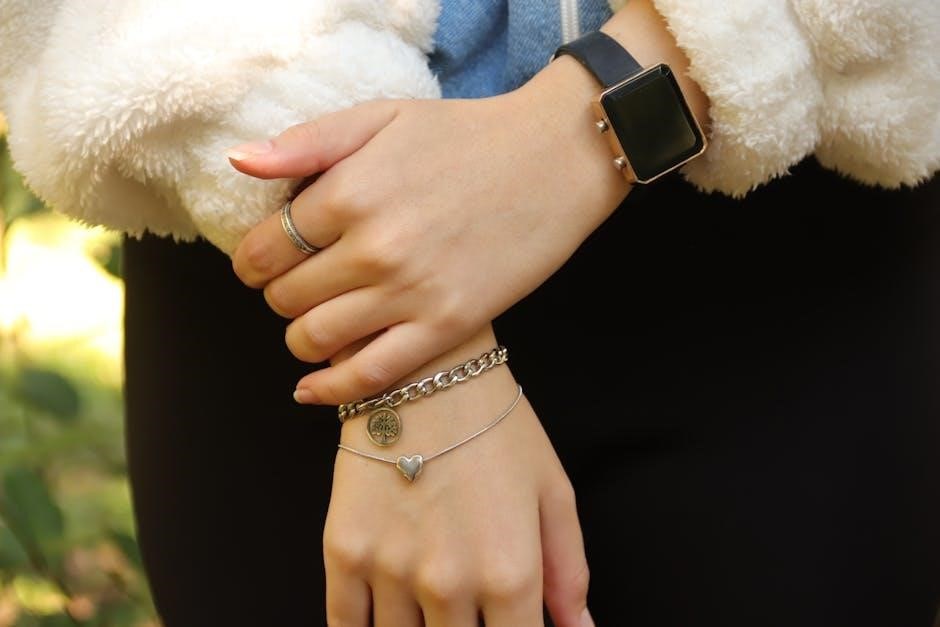
Always test the fit with various strap types, move your wrist through a full range of motion, and assess comfort during activity for optimal sizing.
Testing the Fit with Different Strap Types
Evaluating how a watch feels with diverse strap materials is crucial; leather offers flexibility, while metal bracelets provide a more structured fit, impacting perceived size.
Silicone or fabric straps can conform to the wrist differently, potentially altering comfort levels and the watch’s overall appearance.
Experiment with both fitted and looser straps to determine what feels most secure and aesthetically pleasing on your wrist, considering your activity level.
Pay attention to how the strap interacts with your wrist bone structure, ensuring it doesn’t cause pinching or discomfort during movement.
Assessing Comfort During Movement
Dynamic testing is vital; wear the watch while performing everyday activities to gauge its comfort during wrist flexion and extension.
Observe if the case or lugs dig into your skin, or if the strap feels restrictive when you move your hand.
Ensure the watch doesn’t shift excessively or feel unbalanced, especially during more vigorous movements like exercise.
Consider your lifestyle; a larger watch might be acceptable for occasional wear but impractical for daily activities requiring wrist mobility.
Online Watch Shopping: Size Charts and Resources
Utilize brand-specific sizing guides and customer reviews for accurate measurements; compare case diameters and lug-to-lug lengths to your wrist size.
Explore online resources offering virtual try-on tools or wrist size calculators for a more informed purchasing decision.
Utilizing Brand-Specific Size Guides
Each watch brand often provides detailed size charts on their websites, crucial for accurate online purchases. These guides typically outline case diameter, lug-to-lug measurements, and recommended wrist sizes for their specific models.
Pay close attention to these specifications, as sizing can vary significantly between brands; Apple, Rolex, and Fossil, for example, each have unique sizing conventions. Referencing these guides ensures a better fit, considering female wrist sizes generally fall between 14cm and 18cm.
Don’t hesitate to download and print these charts for easy comparison while browsing, ensuring the watch proportions complement your wrist.
Reading Customer Reviews for Sizing Feedback
Customer reviews offer invaluable real-world insights into watch sizing, particularly regarding how a watch fits on various wrist sizes. Look for reviewers with similar wrist measurements to yours – typically between 14cm and 18cm for women – and note their experiences.
Pay attention to comments about the watch appearing larger or smaller than expected, or regarding strap comfort. These firsthand accounts can supplement brand size guides, which may not always be perfectly accurate.
Focus on reviews mentioning wrist size and perceived watch proportions to make a more informed decision.
Finding Your Perfect Watch Size
Ultimately, discovering your ideal watch size is a blend of accurate measurement, understanding case and lug-to-lug dimensions, and considering personal style. Women’s wrist sizes typically fall between 14cm and 18cm, guiding case size choices from 26mm to 36mm, though larger styles are trending.
Don’t solely rely on generic sizing charts; prioritize trying on watches or carefully reviewing customer feedback regarding fit. Proportion is key – a balanced look enhances your wrist, not overwhelms it.
Embrace experimentation to find a watch that feels comfortable and reflects your individual aesthetic.