Overview of CANIC Math 53 Final Exam
The CANIC Math 53 final PDF offers a concise snapshot of the exam’s scope, highlighting key topics, question types, and formatting guidelines. It serves as a primary reference for students preparing to navigate the assessment efficiently. It also lists recommended resources and practice test links.!
Accessing the CANIC Math 53 Final PDF
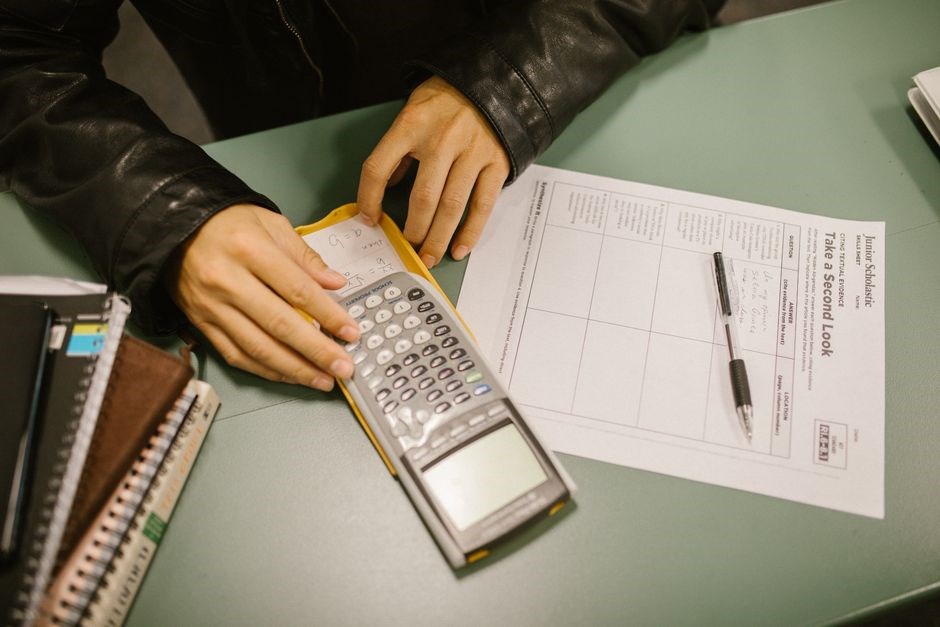
Students can download the CANIC Math 53 final PDF from the official university portal or the course’s LMS page. Ensure you have the latest version by checking the file date and verifying the PDF’s title matches “CANIC Math 53 Final Exam.” Save it locally for offline review. Download via link now
Official Sources
The CANIC Math 53 final PDF is officially distributed through the university’s digital platforms. The primary source is the course’s dedicated page on the campus portal, where instructors upload the exam under a “Resources” or “Exams” tab. The file is typically named “CANIC_Math53_Final_Exam.pdf” and is stored in PDF/A format to preserve layout across devices. The PDF header lists the course code, semester, and exam date for quick reference.
The Learning Management System (LMS) is another reliable channel. Within the course module, instructors upload the final PDF under a “Files” or “Assessment” tab. The file is usually named “CANIC_Math53_Final_Exam.pdf” and is accompanied by a brief description that includes the semester and exam date. Students can preview PDF in LMS, checking page numbers and formatting. The LMS hosts a discussion forum where students can ask clarifying questions about the exam format, ensuring preparedness!!
The repository aggregates all past exams, including the final PDF, and is accessible via the department’s website under an “Assessment Materials” or “Exam Archive” section. Files are named with course code, semester, and exam type. If the PDF is not publicly available, students should email the instructor or coordinator using the syllabus contact; a brief request usually yields a prompt reply.
Checking for Updates
To stay current with the CANIC Math 53 final PDF, students should monitor the official course page, LMS, and department repository for revisions. Instructors typically post an updated version within the first week of the exam period, noting changes in page numbers, question order, or added practice problems. A version history indicator—such as “v2.0” or a date stamp—appears in the PDF filename or within the document header. Students can also subscribe to the course mailing list or set up a file‑watcher on the LMS to receive notifications when a new file is uploaded. If a revision is detected, the instructor usually posts a brief announcement in the LMS discussion board, highlighting key alterations. It is crucial to download the latest copy before final review sessions, as earlier versions may contain outdated practice questions or formatting errors that could mislead preparation. Additionally, the department’s exam archive often retains older PDFs; cross‑referencing the file’s creation date and the instructor’s notes helps confirm the most recent edition. By regularly checking these sources, students can avoid confusion and ensure they are studying the correct material for the CANIC Math 53 final exam. Finally, keep a local backup of the downloaded PDF and note the file’s checksum if available, so that you can verify its integrity after any future updates. This practice ensures that you always have a reliable reference that matches the official version posted by the instructor. Verify the PDF’s integrity by comparing its hash value with the instructor’s checksum to avoid corruption.

Structure of the Final Exam
The CANIC Math 53 final PDF outlines a two‑section format: a multiple‑choice block followed by a problem‑solving segment. Each part has a distinct time allotment, with the first section covering foundational concepts and the second testing application skills!!!
Exam Format and Sections

The CANIC Math 53 final PDF presents a clear, structured layout designed to assess both conceptual understanding and applied problem‑solving skills. The exam is divided into two primary sections: a multiple‑choice portion and a free‑response segment. The multiple‑choice section typically contains 40 questions, each offering four answer choices. These questions cover a broad spectrum of topics, from algebraic manipulation and function analysis to trigonometry and basic calculus concepts. The purpose of this section is to evaluate quick recognition of correct principles and efficient calculation under time pressure.
The free‑response portion follows, comprising 10 detailed problems that require written solutions. Students must demonstrate step‑by‑step reasoning, justify each step, and present final answers clearly. This segment emphasizes depth of understanding, the ability to construct rigorous proofs, and the skill to communicate mathematical reasoning effectively. The free‑response problems often integrate multiple concepts, encouraging students to synthesize knowledge from different areas of the course.
Time allocation is explicitly specified: 60 minutes for the multiple‑choice section and 90 minutes for the free‑response portion. The PDF also includes a concise rubric outlining scoring criteria, such as accuracy, completeness, and presentation. Additionally, a brief note advises students to review the exam’s formatting guidelines, ensuring that handwritten responses are legible and that all required calculations are shown. By adhering to these structural guidelines, students can approach the exam with confidence and clarity, maximizing their performance on both sections of the CANIC Math 53 final.
Time Management Tips
Approaching the CANIC Math 53 final PDF with a strategic time‑management plan can dramatically improve performance. First, allocate a fixed window for the multiple‑choice section: 60 minutes for 40 questions yields an average of 1.5 minutes per question. Use a quick scan to identify familiar problems, answering them immediately, and flag more challenging items for later review. This “skip‑and‑return” technique ensures you secure easy points before time runs out.
For the free‑response portion, dedicate 90 minutes to 10 problems, averaging 9 minutes each. Begin by outlining each solution: write down the required steps, identify key formulas, and estimate the time needed for calculations. If a problem appears too time‑consuming, move on and return only if you have spare minutes. Keep a running tally of elapsed time on a small notepad; this visual cue helps prevent over‑investing in a single question.
Throughout the exam, maintain a steady pace. Avoid the temptation to dwell on a single calculation; instead, keep a mental “time budget” and adjust as needed. After completing each section, quickly review your work if time permits, correcting obvious errors before moving on. By blending systematic scanning, strategic skipping, and constant time monitoring, you’ll maximize accuracy and confidence on the CANIC Math 53 final PDF.
Tip: Allocate a 5‑minute buffer after each section to check answers, and use the 10 minutes to review skipped problems, ensuring no question remains unanswered.

Key Mathematical Topics Covered
The CANIC Math 53 final PDF focuses on algebraic manipulation, quadratic equations, functions, graph analysis, limits, derivatives, integrals, sequences, series, and probability fundamentals. Mastering these areas ensures readiness for exam challenges. Include practice on limits, derivatives, and integrals.
Core Concepts

Students preparing for the CANIC Math 53 final PDF should focus on a set of foundational ideas that recur throughout the exam. These core concepts include algebraic simplification, solving linear and nonlinear equations, manipulating rational expressions, and understanding function composition and inverses. Mastery of these skills allows quick navigation of multiple‑choice items and open‑response problems.
- Linear algebra: systems of equations, matrix operations, determinants, and eigenvalues.
- Quadratic analysis: vertex form, discriminants, factoring, and completing the square.
- Function behavior: domain, range, continuity, and asymptotic analysis.
- Calculus fundamentals: limits, derivatives, basic integration techniques, and the Fundamental Theorem of Calculus.
- Sequences and series: arithmetic and geometric progressions, convergence tests, and summation formulas.
- Probability and statistics: basic probability rules, combinatorial counting, expected value, and variance.
In addition to these topics, the PDF emphasizes the importance of interpreting graph data, solving inequalities, and applying logarithmic and exponential rules. A balanced study plan should allocate time for both conceptual understanding and procedural fluency, ensuring that students can tackle the diverse question formats presented in the final exam.
Students should review past exam solutions, practice mock tests, and clarify challenging concepts to success

Study Strategies and Resources
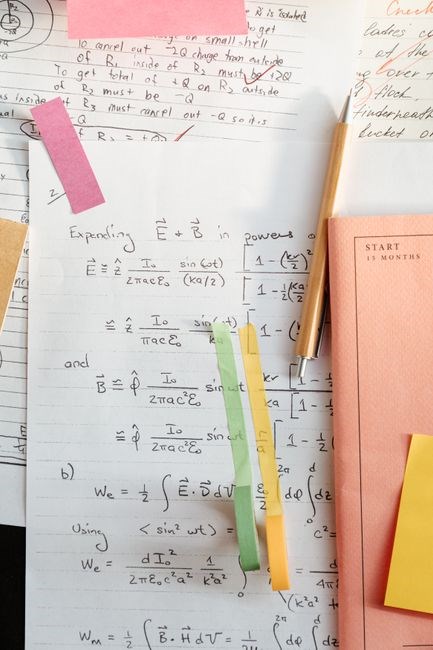
Use spaced repetition, active recall, and practice exams. Organize notes into concise summaries, focus on core concepts, and schedule weekly review sessions. Leverage online platforms, peer study groups, and official CANIC resources for targeted practice!!!!
Study Schedule
Creating a structured timetable is essential for mastering the CANIC Math 53 final PDF. Begin by mapping out the remaining weeks until the exam, allocating dedicated blocks for each major topic—algebraic manipulation, trigonometric identities, and calculus fundamentals. Within each block, schedule short, focused sessions of 45–60 minutes, interspersed with 5‑minute micro‑breaks to maintain cognitive sharpness. Use the first week to review foundational concepts and identify weak areas through diagnostic quizzes. The second week should intensify practice, tackling progressively harder problems from past exams and the official PDF. In the third week, shift emphasis toward timed drills, simulating exam conditions to build endurance and pacing. The final week is reserved for comprehensive review and mental rehearsal; revisit flagged mistakes, refine strategies, and ensure confidence in all sections. Throughout, keep a log of progress, noting time spent, accuracy, and insights gained. Adjust the schedule dynamically based on performance metrics, allocating extra time to persistently challenging topics. Consistency, deliberate practice, and reflective adjustment are the pillars that will transform preparation into success.
Finally, simulate the exam environment by timing yourself on a full-length practice test, noting any recurring errors, and adjusting your strategy accordingly. Review the official PDF after each session to reinforce correct methods, misconceptions. Consistent, focused effort will yield mastery and confidence.

Common Mistakes to Avoid
Students often misread the CANIC Math 53 final PDF, skip practice, or over‑estimate time per question. They also ignore the order of operations and misapply formulas, leading to avoidable errors. Reviewing the PDF and timed practice prevents these errors every day!!
Time Allocation Errors
When reviewing the CANIC Math 53 final PDF, many students fall into the same time‑management traps. First, they read the entire test before starting, which wastes precious minutes that could be spent on solving easier problems. Second, they allocate equal time to each question, ignoring the varying difficulty indicated in the PDF’s section headings. Third, they underestimate the time needed for multi‑step calculations, especially in the algebraic and calculus portions. Fourth, they neglect the “quick‑check” strategy suggested in the PDF, which would allow them to flag and return to challenging items. Finally, they fail to use the “time‑buffer” recommended in the PDF’s study guide, leaving no room for unexpected errors. By addressing these pitfalls—reading strategically, prioritizing by difficulty, pacing for complex sections, and building in buffer time—students can dramatically improve their performance. Students should practice pacing by timing each section, as the PDF indicates the algebraic portion needs more time than the probability section. The PDF recommends allocating a small buffer for each question, especially those requiring multiple steps or unit conversions often. The PDF also highlights that the final exam is designed to test conceptual understanding, not just procedural accuracy. Remember to review the PDF’s sample questions; they show answer formats and common pitfalls!!

Final Exam Day Checklist
Pack a calculator, pencils, eraser, and a copy of the CANIC Math 53 final PDF. Double‑check the exam time, venue, and ID requirements. Bring a water bottle, snack, and a timer app. Review key formulas, practice problems, and set a calm mindset before starting. Arrive check seating, and review the PDF.
What to Bring
Before heading to the exam hall, gather all essentials that will keep you focused and compliant with CANIC regulations. A reliable scientific calculator (or the specific model approved by the department) is mandatory for the Math 53 final PDF. Include a set of #2 pencils, a sharpener, and a small eraser to avoid any last‑minute mishaps. A ruler or straightedge can help with diagram accuracy, while a watch or phone with a timer ensures you stay on schedule.
Bring a valid photo ID and any confirmation email or student ID card that verifies your enrollment. A lightweight, non‑refillable notebook or a few blank sheets can be useful for rough calculations or sketching graphs. Pack a small bottle of water and a light snack—fruit or granola bars—to maintain energy during the test. Keep your phone in silent mode or turned off; some venues prohibit electronic devices.
Additionally, bring a small notepad and a pen for quick calculations or to jot down key points. A spare set of batteries for your calculator, if required, can prevent unexpected downtime. Ensure your bag is compliant with exam hall policies—no large backpacks or prohibited items.
Finally, double‑check the exam room’s layout and note the location of restrooms, water stations, and emergency exits. Arrive early to acclimate, review the PDF one last time, and mentally rehearse a calm, focused approach to the test.
Take a moment to review your answers, then submit confidently and double‑check your time before exit!
Good luck, stay calm, and give your best effort when you go.